
About a decade ago, Paul Stacey gave me a copy of David Bollier’s Think Like a Commoner.
At the time, I was already convinced of the value of making knowledge openly accessible, discoverable and reusable. Much of my academic research and early professional work had been about connecting information scattered across different repositories and institutions, using metadata, standards and interoperability to help people find and use it.
I also held a strong conviction that knowledge generated through public funding should, as a matter of principle, be openly available for others to learn from and build upon. After all, if public resources have financed the creation of knowledge, shouldn’t that knowledge be available for public benefit?
Creative Commons licenses seemed to offer an important part of the answer. Combined with appropriate metadata, attribution and technical standards, they could clarify how published works might be reused, adapted and shared. I believed that applying these approaches to agriculture and food could help overcome many of the barriers between institutions and information systems.
Paul was already looking at another dimension of the problem: how could openness and economic sustainability work together?
This summer, I picked up Bollier’s book again, but not reading it through the same eyes. Since then, I have moved from academic research and open knowledge initiatives into entrepreneurship and commercial food safety intelligence. I have come to appreciate the substantial work required to transform information into something reliable and useful, but also the complexity of the rights and responsibilities associated with that work.
And now AI is changing the scale at which information can be discovered, combined, interpreted and used.
The questions that interested me fifteen or twenty years ago have not disappeared. If anything, they have become more complicated. Making knowledge accessible is not the same as creating a commons
One of Bollier’s central arguments is that a commons is not simply a collection of resources that anyone can access. As he explains in The Commons, Short and Sweet, a commons also involves a community and the relationships, practices and rules through which people govern and sustain shared resources.
This distinction makes me reconsider some of my earlier work.

Through the Global Food Safety Partnership (GFSP), I had the opportunity to work with Paul Stacey, Christine Geith and many other colleagues from public institutions, academia and the private sector. I participated in the Knowledge and Learning Systems Working Group, where we explored how learning and capacity-development resources could become more accessible and reusable across organizations.
One way I remember describing the ambition was as a “database of databases”: connecting existing collections of food-safety learning resources so that knowledge could become easier to discover, reuse and improve.
The thinking was straightforward. Food safety is a shared challenge. Why should institutions repeatedly develop similar educational materials when existing knowledge could be found, adapted and improved?
I still believe in that objective.
Paul, together with Garin Fons and Theresa Bernardo, explored some of these questions in their 2015 paper, An Open Ecosystem Engagement Strategy Through the Lens of Global Food Safety. Their work examined how open approaches could support collaboration, capacity development and sustainable participation in food-safety knowledge sharing.
Looking back, however, I wonder whether making resources discoverable and reusable was only one part of a much larger problem. Who would maintain them? Who would decide which contributions were reliable? How would institutions cooperate beyond the duration of individual projects? And what would encourage people to continue contributing when initial funding ended?
A technically connected collection of resources is valuable. But that does not necessarily make it a commons.
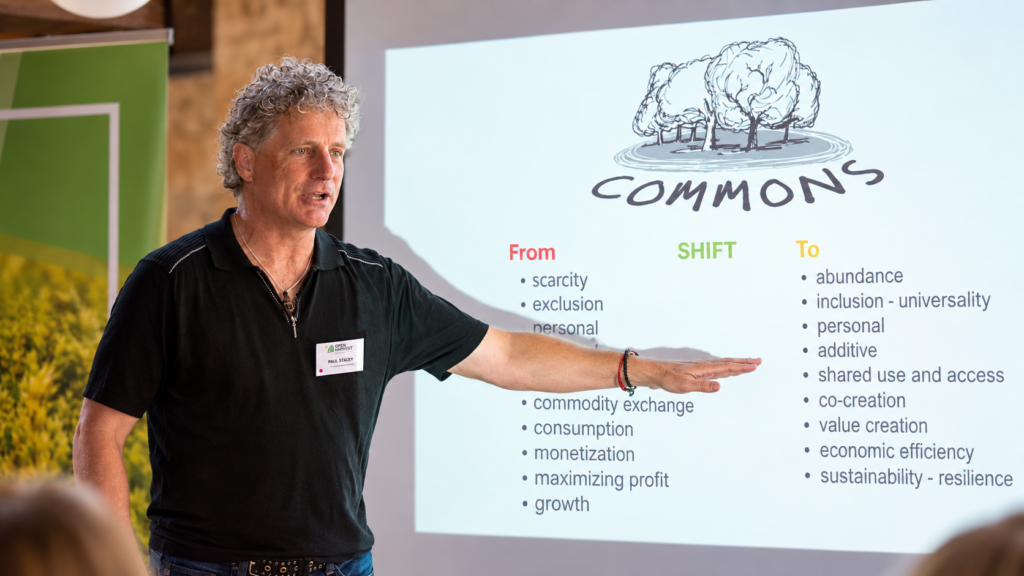
What changes when knowledge also becomes a business?
My years working with commercial food safety intelligence have added another perspective. Making information available is one thing. Making it reliable, relevant and useful enough to support real decisions is another.
Consider a public food safety alert. Publishing the alert makes important information available, but using it across different countries, languages, products and regulatory contexts may require substantial additional work. Information needs to be collected, translated, classified, checked, connected with other records and continuously maintained.
This requires expertise, technology, infrastructure and investment. It can create genuine additional value, and I believe that the people and organizations doing this work should have legitimate opportunities to earn from it.
But we should also be precise about what is being created and what rights follow.
The fact that someone invests in organizing or analysing public information does not automatically give them ownership of the underlying facts. Rights over original works, databases, derived materials and services depend on their nature and on applicable legal and contractual conditions.
And the complexity goes further than ownership.
Consider laboratory testing. A food business commissions and pays for an analysis, while a laboratory performs the test using its equipment, scientific expertise, validated methods and quality systems.
Who controls the resulting information? Who may share it, combine it with other results or use it to develop broader knowledge? Does paying for the test confer unrestricted rights to reuse its findings? And who remains accountable if the result is incorrect or interpreted outside its proper context?
There is no universal answer. The applicable agreements, professional responsibilities, confidentiality requirements and regulatory context matter.
This is something I understand differently today.
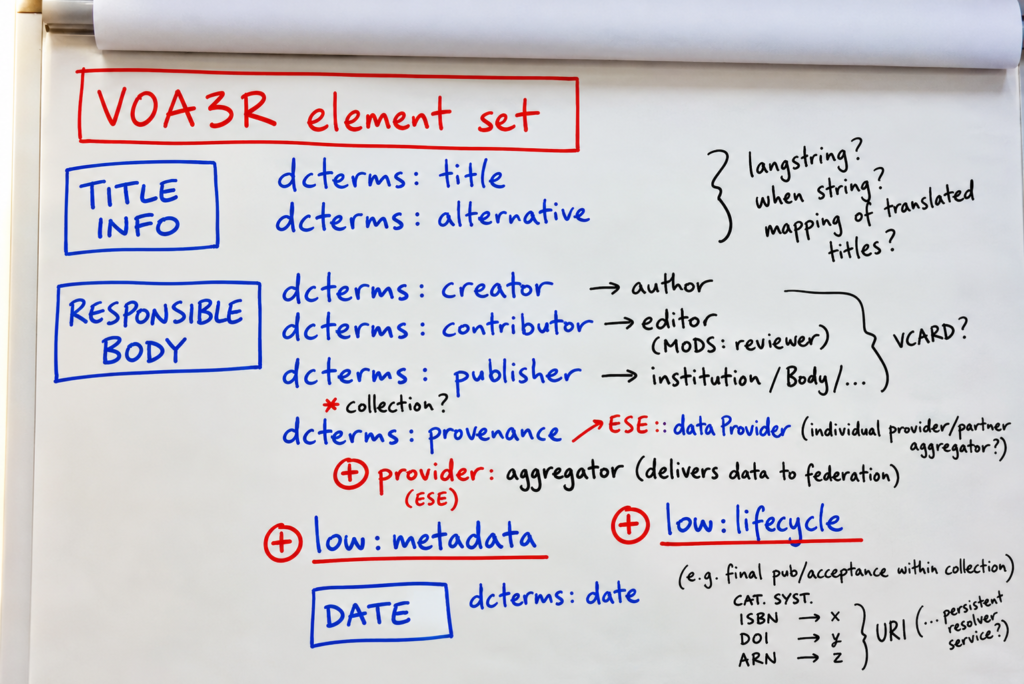
Metadata and licenses remain useful tools. But they cannot, on their own, resolve questions of ownership, professional independence, quality, liability or trust.
And while commercial services may create valuable intelligence from information produced by public authorities, scientists, laboratories and universities, much of that underlying knowledge depends on contributions and institutions that are not visible to the final user.
How do we recognize and reward the work that makes information actionable while also sustaining the foundations on which that work depends?
I do not see open knowledge and commercial value as necessarily opposing objectives. But neither do I believe that a healthy relationship between them happens automatically.
AI makes the questions more pressing. It is becoming easier for machines to discover, extract, combine, summarize and interpret information from many different sources.
This creates opportunities to make scientific and food-safety knowledge more useful, including for people and organizations without extensive specialist resources. But it can also make the underlying relationships harder to see.
When an AI system generates an answer, can we identify the original sources? Can we establish whether the information was used under appropriate permissions? Can we distinguish an authoritative scientific finding from an interpretation or a machine-generated inference?
And if the answer influences a consequential food risk prevention decision, who remains responsible for verifying it and acting appropriately?
These questions are not entirely new. We encountered versions of them when trying to connect information systems and make knowledge interoperable. What is changing is the scale and speed at which ambiguities about meaning, provenance, permissions and reliability can spread.
I increasingly think that the next generation of shared knowledge infrastructure will need more than technically compatible data. It will also need clearer information about where knowledge comes from, how it can be used, what its limitations are and who is responsible for maintaining it.
AI may help reduce some of the technical costs of sharing knowledge. It does not automatically resolve the institutional and economic questions.
Rereading Bollier has brought me back to a provisional proposition about food safety knowledge. I would frame it around two legitimate claims and one reciprocal responsibility.
First, foundational knowledge needed to protect human life should be appropriately accessible and reusable.
This is particularly important for information generated through public resources, including food-safety alerts, scientific evidence and educational materials. There may be legitimate restrictions, but public benefit should remain a central consideration.
Second, creating reliable and actionable intelligence from that knowledge deserves legitimate reward.
Openness does not remove the need for expertise, quality assurance, infrastructure and sustained investment. Organizations that create genuine additional value should have opportunities to sustain that work commercially.
Third, those benefiting from shared knowledge should consider how they can help preserve and strengthen its foundations.
This could involve supporting shared infrastructure, improving data quality, returning corrections, contributing to standards, sharing educational resources or helping develop the capabilities of institutions that maintain the underlying knowledge.
Paul has continued exploring this relationship between openness, value and long-term stewardship, including in his more recent writing on sustainability models.
I see these three propositions as principles worth discussing, not established universal rights or a ready-made governance model.
And there are difficult objections. Not all food safety information can or should be open. Laboratory results, inspection reports, scientific findings, customer information and regulatory records may involve different rights, obligations and restrictions.
Public institutions may already be funded to make knowledge widely available. Should commercial beneficiaries necessarily have additional obligations? How would a fair contribution be determined? Who would collect it, and who would decide how the resources should be used?
Could attempts to organize shared knowledge create new forms of gatekeeping, rather than removing barriers?
These questions matter because the objective cannot simply be to declare more information open. We need to understand the conditions under which sharing creates lasting value without undermining legitimate rights, incentives and responsibilities.
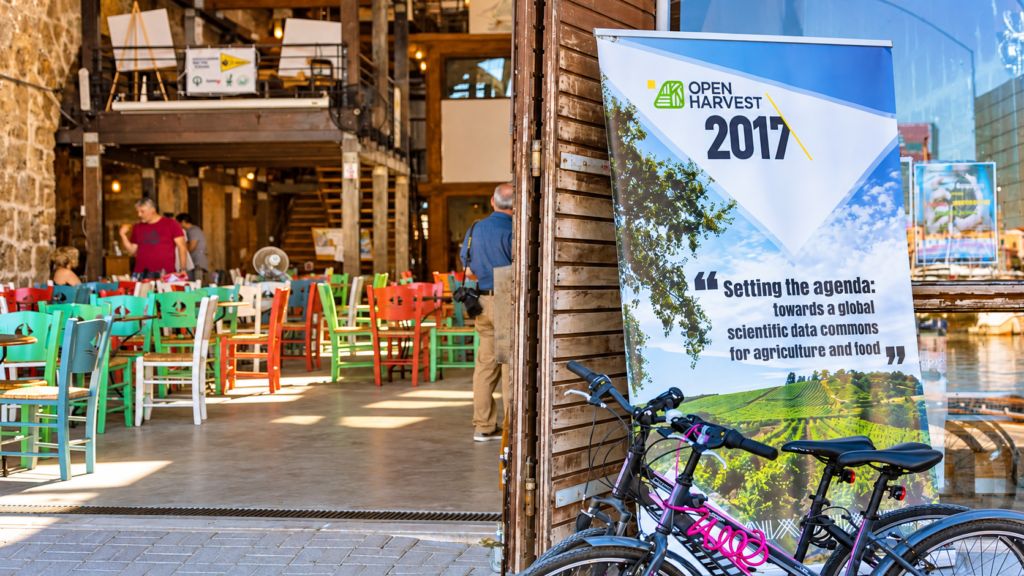
So, who would the commoners be?
Perhaps this is the question that interests me most after rereading Bollier.
In food safety, knowledge is created, financed, maintained and used by many different participants: scientists, regulators, laboratories, educators, businesses, professional communities and consumers.
They do not all have the same responsibilities, interests or authority. A regulator’s public responsibilities are different from those of a laboratory, a scientific publisher or a commercial information provider.
A commons would therefore require much more than a technical platform for exchanging data.
Who would participate in governing it? Which knowledge would belong in its shared foundation, and which would require restricted access? Who would maintain quality, resolve disagreements and ensure that the arrangement remained sustainable? And ultimately, how would we know that this shared knowledge was helping people make better decisions and prevent food-safety harm?
I do not yet have a convincing institutional model. But after more than twenty years of working on how knowledge can be organized, connected, shared and made useful, I am beginning to think that my original understanding of openness was incomplete.
I still believe strongly in making publicly funded knowledge available for public benefit. I also believe in the legitimate commercial value of turning information into useful intelligence. What I am less certain about is how we should organize the responsibilities that connect the two.
Perhaps that is where the conversation about a food safety commons should begin: not simply with what information we should open, but with who will care for it, under which rules, and for whose benefit.
These are personal reflections and do not represent the views or positions of SGS or FoodNexus.